Westchester County
Slate & Cedar Roofing in White Plains, NY
The Greenwich Slate & Cedar Roof Guide explains slate, cedar and tile roofing for homeowners in White Plains, NY.
Slate and clay tile roof repair, copper gutter replacement and ice-dam fixes make up most specialty roof work in White Plains' older neighborhoods. Tile repairs typically run $500–$3,000; half-round copper gutters are $40–$80 per linear ft installed. Steep Tudor and Normandy roofs add staging time, so access is a real part of the price.
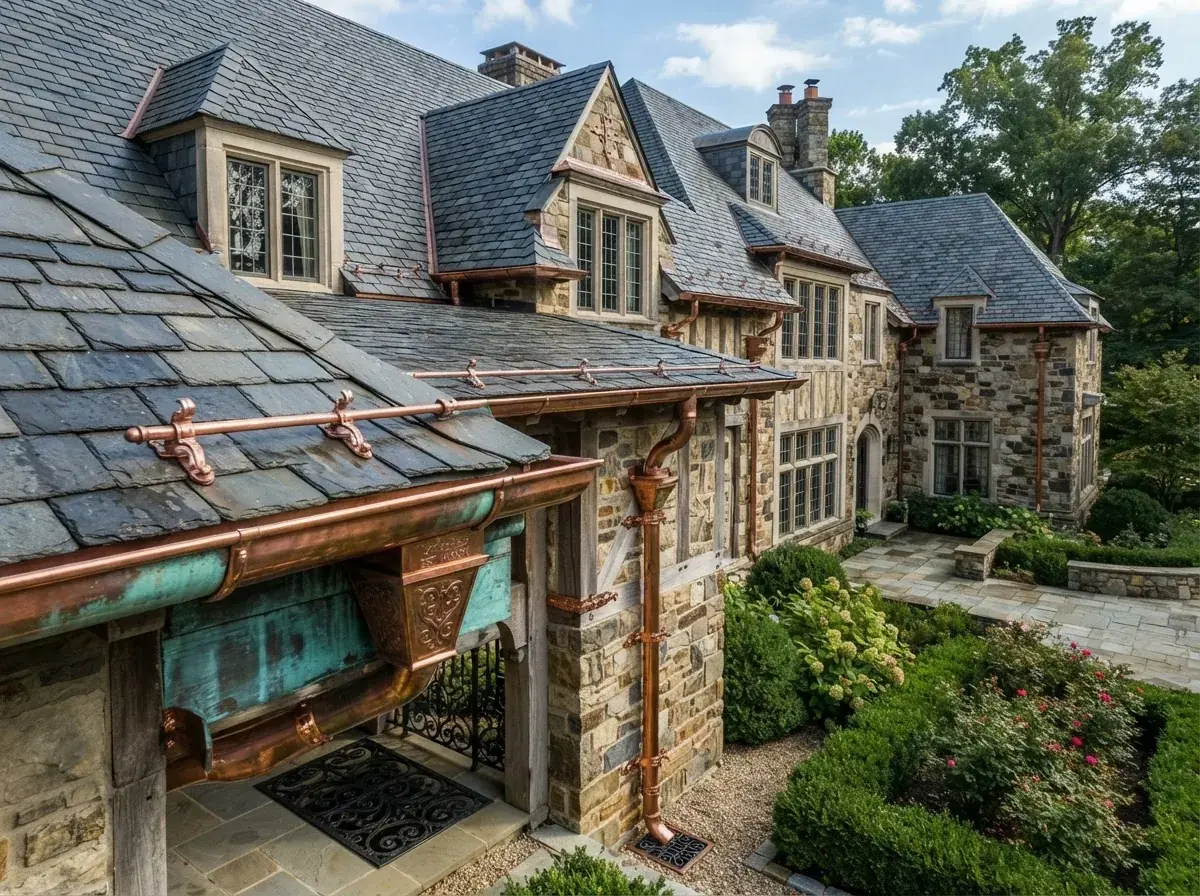
- 1920s Tudor and Normandy roofs are steep and detailed
- Original gutters often fail before the slate
- Freeze–thaw and ice dams cause most winter leaks
- Clay tile breaks under foot traffic; repairs need care
White Plains Neighborhoods and Their Roofs
White Plains has been the seat of Westchester County since 1758, and today the city has about 59,500 residents. It became a village in 1866 and a city in 1916. Beyond downtown, established residential neighborhoods such as Gedney Farms, Rosedale and the Highlands hold many Colonial Revival and Tudor Revival homes from the 1920s, and Battle Hill and Fisher Hill have their own older housing.
The city's history runs deep: the Battle of White Plains was fought on October 28, 1776, largely on Chatterton Hill, and the Jacob Purdy House, built in 1721, served as George Washington's headquarters in 1778. Most homes that need specialty roof work, though, date from the early-20th-century suburban boom.
Gedney Farms
Gedney Farms, once home to the Gedney Farm Hotel and golf club, is known for Colonial Revival, Tudor Revival and French Normandy-style homes, many built in the 1920s. Homes like these often have slate or tile roofs and copper or built-in gutters.
Rosedale and the Highlands
A mix of Tudor, Colonial and later homes. Slate is common on the older houses, and many have been re-roofed once already, sometimes in a different material on the additions.
Battle Hill and Fisher Hill
Older streets with Victorian and early-1900s houses on hillside lots. Exposed slopes take more wind, so ridges and rakes deserve a close look.
Steep, Detailed Rooflines
Tudor and Normandy houses have steep pitches, turrets, eyebrow dormers and many valleys. Repairs need roofers who can safely work steep slopes and match unusual shapes. Expect roof brackets, ladders hooked over the ridge, and sometimes scaffolding for a turret; those costs are part of doing the job without breaking more slate or tile than gets fixed.
On clay tile, the main risk is people. Tiles crack when walked on carelessly, so a good repair includes a plan for access, spare matched tiles, and a check that no new breaks were made on the way to the problem.
Older Gutters, Flashing and Winter Leaks
On 1920s homes, built-in or original copper gutters and flashing often wear out long before slate or tile does. Relining or replacing them is often the most valuable repair. Signs to look for:
- Peeling paint or stains on the cornice and fascia below a built-in gutter.
- Green streaks or pinholes in old copper, especially at seams and outlets.
- Water running behind the gutter rather than into it.
Freeze–thaw cycles and ice dams are a common cause of winter leaks in Westchester. Ice-and-water underlayment at the eaves and snow guards above entries and gutters help. On a slate roof that isn't being replaced, underlayment can still be added at the eaves by lifting the lower courses during an eave or gutter repair.
Signs a White Plains Roof Needs Attention
Most roof problems on older homes show up indoors or at ground level before anyone climbs a ladder. Worth watching for: brown stains on upper-floor ceilings after storms, peeling paint high on exterior walls, pieces of slate or tile in the flower beds, overflowing gutters, and icicles thick enough to suggest ice dams. Any of these is a reason for a closer look before the next season.
Historic Preservation in White Plains
White Plains adopted its Historic Preservation Law in 2015, and its Historic Preservation Commission reviews applications to designate local landmarks and historic districts and makes recommendations to the Common Council. Only a property owner or the commission can start a designation. Most homes are not designated, so a like-for-like re-roof is usually a permit matter, but owners of designated properties should check with the city before changing materials.
Westchester County requires home improvement contractors, roofers included, to hold a county home improvement license, and homeowners can check a contractor's license number with the Westchester County Department of Consumer Protection before signing anything.
Common Roof Work in White Plains and Typical Costs
| Issue | Typical fix | Typical range |
|---|---|---|
| Cracked or slipped clay tiles | Matched tile replacement | $500–$3,000 |
| Tile roof leaking but tiles sound | Lift tiles, renew underlayment, relay | $12–$25 per sq ft |
| Failed built-in or copper gutters | Copper relining or new half-round gutters | $40–$80 per linear ft |
| Leaks at turret or dormer valleys | New copper valleys and flashing | $2,000–$8,000 |
| Ice dams at eaves | Eave underlayment and snow guards | $1,500–$6,000 |
| Worn slate across whole slopes | Natural slate replacement | $30–$60 per sq ft |
Ranges are typical for Fairfield County and Westchester in 2026 and are for planning only. They are not quotes; the real price depends on the roof, access and materials.
Clay Tile Roofs on White Plains' Normandy and Mediterranean Homes
Clay tile is less common than slate in Westchester, but White Plains' 1920s Normandy, Spanish Colonial and Mediterranean Revival houses carry a fair amount of it. Clay tile itself is extremely durable; well-made tile can last as long as slate. The weak points are the layers and details around it:
- Underlayment. The original felt under a 1920s tile roof has usually long since dried out. Tile sheds most water, but the underlayment is the real waterproofing.
- Fasteners. Old steel nails rust, and tiles slip on steep slopes.
- Freeze–thaw. Lower-quality tile can absorb water, freeze and spall. Matching replacements need to be rated for a cold climate.
- Ridges and hips. Mortar-set ridge tiles crack and loosen; modern repairs often use mechanical fastening with a ventilated ridge.
Matching color and profile matters as much as on slate. Some historic tile patterns are still made; for others, salvaged tile is the only exact match, so keeping any spares found in a garage or attic is worthwhile.
Planning Roof Work Around a White Plains Winter
Most specialty roof work in Westchester is best done between April and November. Mortar, sealants and soldered copper all work better in milder weather, and slate and tile are more brittle in the cold. That doesn't mean a winter leak has to wait: an emergency tarp or a temporary repair can protect the house until a permanent fix is practical.
For larger projects, planning ahead pays. A full slate or tile roof, or a complete copper gutter system, takes time to source and schedule, and specialty crews book up in spring. Getting the inspection done in late fall or winter, with photos and a written scope, leaves time to compare bids and check any permit requirements with the city's building department before work starts.
Slate & Cedar Roofing: Common Questions
Are copper gutters worth the cost on a White Plains house?
Yes, for most pre-war houses that already had them. Copper costs more up front than aluminum but can last many decades, suits the period look, and handles winter ice and debris better. On a newer house with an asphalt roof, the extra cost is harder to justify.
How long do repairs on a steep Tudor roof take?
Most valley, flashing or slate repairs take one to three days, plus setup time for roof brackets or scaffolding on steep or tall slopes. Weather is the main cause of delays, especially in winter.
Can a clay tile roof be saved if it leaks everywhere?
Yes, often. Clay tile frequently outlasts the felt underlayment beneath it. Lifting the tiles, installing new underlayment and relaying the sound tiles costs much less than new tile and keeps the original look.
Do I need approval to re-roof a historic house in Westchester?
It depends on the municipality and whether the home is a designated landmark or inside a local historic district. Several Westchester towns and villages require a certificate of appropriateness for exterior alterations to designated properties. Check with the building or planning department before changing roofing materials.
Before you hire
Check the Contractor First
Roofing on an existing home is home improvement in Connecticut: the contractor must be registered with the Department of Consumer Protection and show the HIC number in its ads and contract. Westchester County licenses home improvement contractors the same way.
- Look up a Connecticut HIC registration
- Search Westchester County licences
- Questions to ask a slate or cedar roofer
This site is an independent guide. It doesn't perform roofing work or recommend a particular company.