Greenwich, CT · Fairfield County · Westchester
Cedar Shake Roof Replacement in Greenwich, CT
The Greenwich Slate & Cedar Roof Guide explains cedar shake roof replacement for homeowners in Greenwich, CT and surrounding towns including Stamford, Darien and New Canaan.
A full cedar shake roof replacement in Fairfield County typically costs $15–$28 per sq ft installed, depending on the grade of cedar, the pitch and how much flashing and copper work the roof has. Most houses take one to three weeks of good weather. The job is a full tear-off to the deck, new ice barrier and underlayment, ventilation, new flashing and new shakes; done well, a new cedar roof commonly lasts 25 to 40 years.
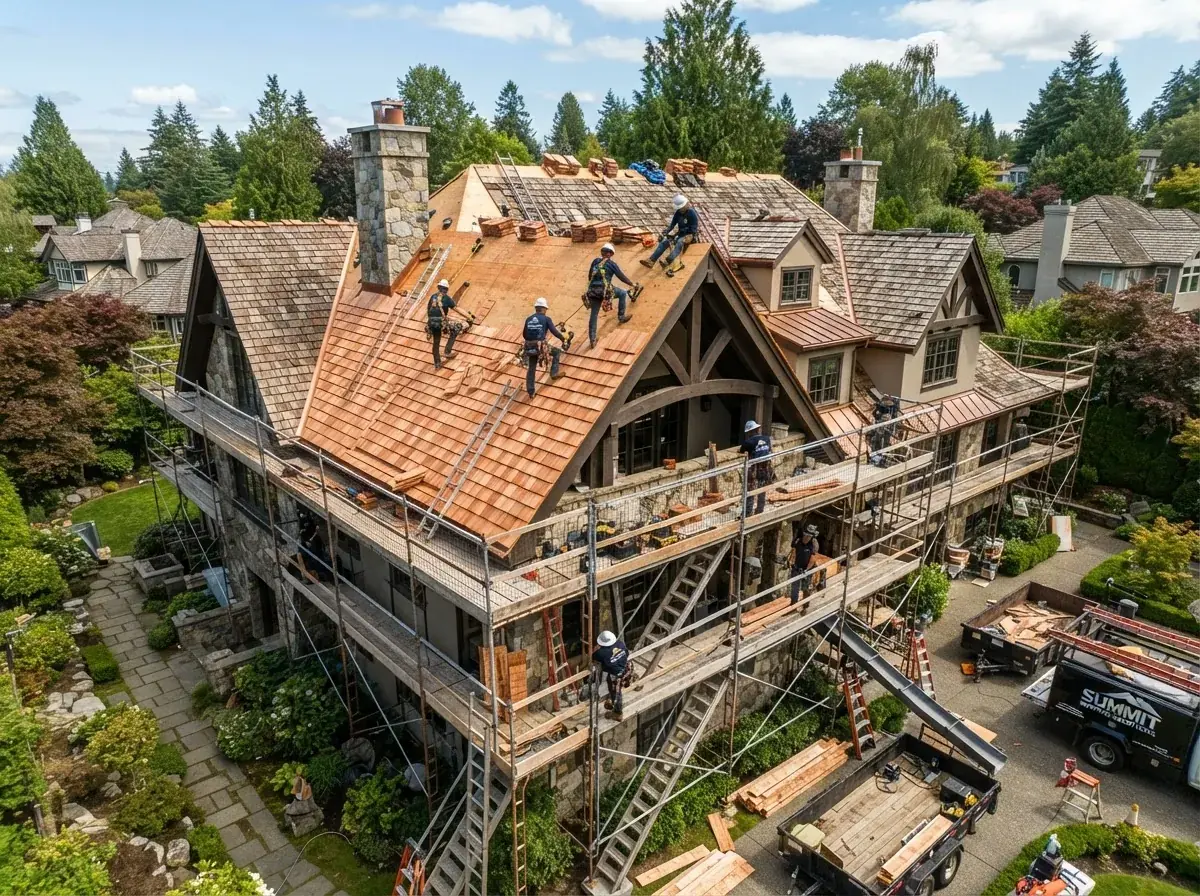
- Full tear-off to the deck
- Premium or No. 1 grade cedar, stated in writing
- Ice barrier at eaves and valleys
- Stainless steel fasteners throughout
- Building permit pulled before work starts
Types of Cedar Roof Replacement
Handsplit cedar shake roofs
Rough-faced, thick and deeply shadowed. The classic look for shingle-style and rustic houses. Heavier shakes generally last longer.
Tapersawn cedar shake roofs
Sawn on both faces for a crisper, more uniform look, and thicker than shingles. A common choice on Colonial and traditional homes.
Cedar shingle roofs
Thinner, smooth-sawn and laid at a tighter exposure. Often the original roof on older Capes and Colonials.
Pressure-treated and fire-retardant cedar
Factory-treated shakes resist fungus and decay longer, and fire-retardant-treated shakes are available where a rated roof is needed. Ask for the treatment and its warranty in writing.
Cedar to another material
Some owners switch to synthetic slate or natural slate. In a local historic district, a change of roofing material usually needs approval first.
What a Proper Cedar Roof Replacement Includes
- Tear-off and deck check. Old shakes and felt come off, and rotted sheathing is replaced. Older houses often have spaced boards (skip sheathing) under the cedar, which can be kept or covered with new sheathing depending on the design.
- Ice barrier. Self-adhered membrane at the eaves, valleys and around penetrations, to stop ice-dam water backing up under the shakes.
- Interlayment. Shake roofs are laid with strips of felt between each course, as the building code requires, to stop wind-driven rain getting through the gaps.
- Ventilation. Cedar lasts longest when it can dry from both sides. A breathable mat under the shakes and balanced ridge and soffit venting help.
- Flashing. New step, counter, valley and drip-edge metal. Copper is the long-life choice to match a long-life roof.
- Fasteners. Stainless steel, two per shake, set flush.
- Cleanup and nail sweep. Daily, with magnets on lawns and driveways.
Cedar Grades: Why They Matter
The Cedar Shake and Shingle Bureau grades its members' shakes and shingles. Premium grade is 100% edge grain, clear heartwood; Number 1 grade allows some flat grain. Edge-grain wood moves less with moisture, so it cups and splits less. The Bureau also notes that a blue label alone isn't a grade, so proposals should name the product, grade, thickness and length, not just "cedar" or "blue label."
Thicker is better for life span. A heavy handsplit shake has more wood to weather away than a medium one, which is why two cedar roofs at the same price per square foot can wear very differently.
What Cedar Roof Replacement Costs
Typical installed cost is $15–$28 per sq ft. Ranges are typical for Fairfield County and Westchester in 2026 and are for planning only. They are not quotes; the real price depends on the roof, access and materials.
- Grade and thickness of the cedar.
- Roof complexity: dormers, turrets, valleys and steep pitches take far longer than open slopes.
- Copper: flashing, valleys and copper gutters add cost and life.
- Deck repairs found after tear-off.
- Staging and access, including protecting landscaping and stone terraces below.
An itemized proposal makes comparing contractors much easier than a single lump-sum number.
How a Cedar Roof Replacement Runs, Day by Day
- Before work: permit, materials ordered and delivered, landscaping and terraces protected, staging set up.
- Tear-off in sections: only as much roof is opened as can be dried in the same day, with tarps ready if weather turns.
- Deck repairs and waterproofing: rotted boards replaced, ice barrier and underlayment installed.
- Flashing and shakes: valleys and wall flashing go in as the courses rise; ridge and hip caps last.
- Final walk-around: nail sweep, gutter check, photos, and the town inspection where required.
A written warranty from the contractor for workmanship, separate from the cedar maker's product warranty, is worth asking for, along with a copy of the permit and the final inspection sign-off.
Permits, Timing and Historic Districts
A full re-roof in Connecticut and New York towns generally needs a building permit, and the contractor normally pulls it. Homes in a local historic district, such as those in Greenwich, New Canaan or parts of Stamford, may need approval before changing the roofing material; a like-for-like cedar replacement is usually simpler. Late spring through fall is the usual season. Cedar can go on in cold weather, but self-adhered membranes need a minimum temperature to bond.
Not sure a full replacement is needed? See cedar shake roof repair and cedar roof treatment.
Cedar Shake Roof Replacement: Common Questions
How long does a new cedar shake roof last in Connecticut?
Commonly 25 to 40 years. Thicker, premium-grade shakes, good ventilation, stainless fasteners and regular cleaning push it toward the top of that range; heavy shade and neglect pull it down.
Is cedar allowed in a historic district?
Yes, usually. Replacing cedar with cedar is the easiest change to get approved. Switching to a different material may need a certificate of appropriateness from the town's historic district commission first.
Do I need a permit to replace a cedar roof?
Yes, in most Connecticut and Westchester towns a full re-roof needs a building permit. The contractor normally applies for it, and the town inspects the work.
Can new cedar go over the old roof?
No. Cedar should go over a clean deck after a full tear-off, so rot can be found and fixed, and so the ice barrier, interlayment and ventilation can be installed properly.
Before you hire
Check the Contractor First
Roofing on an existing home is home improvement in Connecticut: the contractor must be registered with the Department of Consumer Protection and show the HIC number in its ads and contract. Westchester County licenses home improvement contractors the same way.
- Look up a Connecticut HIC registration
- Search Westchester County licences
- Questions to ask a slate or cedar roofer
This site is an independent guide. It doesn't perform roofing work or recommend a particular company.