Greenwich, CT · Fairfield County · Westchester
Storm & Hail Roof Damage Repair in Greenwich, CT
The Greenwich Slate & Cedar Roof Guide explains storm and hail roof damage repair for homeowners in Greenwich, CT and surrounding towns including Stamford, Darien and New Canaan.
After a storm, the first job is to stop water getting in. Emergency tarping typically costs $300–$1,500, and permanent repair follows once the damage is documented and the right matching slate, shakes or tile are found. Wind, falling limbs and hail all damage specialty roofs differently, and cracked slate or bruised cedar is often invisible from the ground.
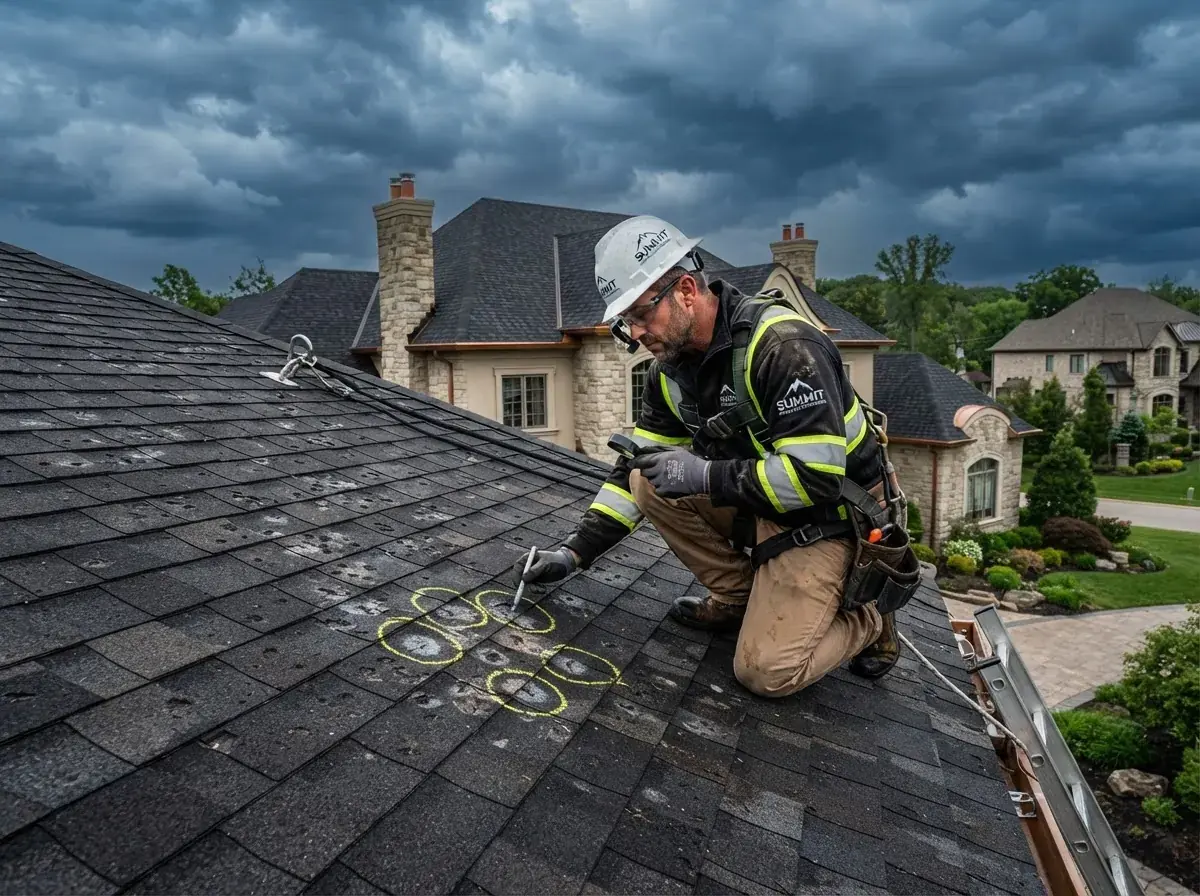
- Temporary protection first
- Photos and notes before anything is removed
- Matching slate, cedar or tile for repairs
- Hire a CT-registered contractor
Types of Storm Damage on Specialty Roofs
Wind damage
Nor'easters and summer storms lift and snap slates whose nails have rusted, peel back ridge and hip pieces, and tear loose flashing. Shoreline roofs take it hardest.
Tree and limb impact
The most common serious damage in wooded parts of Greenwich, North Stamford, Wilton and northern Westchester: broken slates or tiles, cracked rafters and holed decking.
Hail damage
Hail can crack slate and clay tile and split or bruise cedar. Hairline cracks and soft spots are easy to miss without walking the roof.
Flashing and gutter damage
Loosened chimney and wall flashing and torn gutters let water in even when the roof surface looks intact.
Ice and snow damage
Sliding snow that rips off gutters and snow guards, and ice dams that back water under the eaves.
What to Do in the First 48 Hours
- Stay safe. Don't climb a wet or storm-damaged roof, and keep clear of downed lines. Slate and tile are slippery and break underfoot.
- Photograph everything. Take dated photos and video of the roof from the ground, the attic, ceilings, debris in the yard, and any fallen limbs, before anything is moved.
- Limit further damage. Most homeowners policies expect reasonable steps to protect the property from further damage, such as a tarp, catching water and moving belongings. Keep receipts.
- Report the claim to the insurer promptly and note the claim number.
- Keep broken pieces of slate or tile; they help match the material later.
The Connecticut Insurance Department publishes homeowners storm-claim guidance and takes complaints when a claim stalls. In New York, the Department of Financial Services does the same.
Documenting Roof Damage for an Insurance Claim
The adjuster decides what the policy covers; a contractor can't promise an outcome, and anyone who does should be treated with caution. What a good roofer can provide is clear evidence:
- dated photos of each damaged area, with close-ups and wider shots showing location;
- the roofing material, its size and type (for example, the slate's quarry color and dimensions);
- a written scope that separates storm damage from wear that was already there;
- an itemized estimate for repair in matching material.
Matching matters on slate, tile and cedar. A repair in the wrong color slate or a different tile profile can leave an obvious patch. If matching material isn't available, the scope should say so and explain the options.
Avoiding Storm Chasers
After big storms, out-of-area crews go door to door. Connecticut requires anyone doing home improvement work to hold a home improvement contractor registration, and Westchester County requires its own home improvement license. Before signing:
- look up the contractor's registration on the Connecticut eLicense site, or the license with Westchester County Consumer Protection;
- get a written contract (Connecticut's Home Improvement Act requires one, with a three-day right to cancel);
- don't sign over insurance benefits or pay large deposits up front;
- be wary of anyone pushing a full replacement of a slate roof that only has local damage.
What Affects the Cost of Storm Repair
| Work | Typical range |
|---|---|
| Emergency tarping | $300–$1,500 |
| Slate repair, one area | $500–$2,500 |
| Flashing or valley repair on slate | $2,000–$8,000 |
| Cedar shake repair | $600–$3,000 |
| Clay or concrete tile repair | $500–$3,000 |
Tree damage that breaks rafters or decking adds carpentry, and finding salvaged slate in an unusual color can take time. Ranges are typical for Fairfield County and Westchester in 2026 and are for planning only. They are not quotes; the real price depends on the roof, access and materials.
Permanent Repair in Matching Material
Once the roof is dry and the claim is under way, permanent repair should match what's there. On slate, that means the same quarry color, thickness and size, set with copper nails or slate hooks, never roofing cement. Salvaged slate is often the best match on older roofs. On cedar, new shakes of the same grade and exposure will weather to match within a few seasons. On clay tile, the profile and color have to match, and some discontinued tiles can only be found salvaged.
Storm damage is also a chance to check what was already wearing out: rusted nails, old flashing, a failing valley. Fixing them during the same visit saves a second round of staging, but those items should be listed separately from the storm damage in any estimate.
Storm & Hail Roof Damage Repair: Common Questions
Will homeowners insurance pay for a storm-damaged slate roof?
It depends on the policy and the adjuster's findings. Sudden damage from wind, hail or a falling tree is often covered; wear and old leaks usually aren't. Read the policy's duties-after-loss section, document the damage, and ask the insurer directly.
Can hail really damage slate?
Yes. Large hail can crack slate and clay tile and bruise or split cedar shakes. The cracks are often fine and hard to see from the ground, so a close inspection by someone who works on slate is worth it after a hailstorm.
Is a tarp safe on a slate or tile roof?
Yes, if it's put on carefully. Walking on slate or tile breaks it, so tarps should be set from ladders, roof hooks or a lift and weighted or fastened without nailing through sound slates. A poorly set tarp can cause more damage than the storm.
Does one storm-damaged area mean the whole roof needs replacing?
No, not usually. Slate, tile and cedar can be repaired piece by piece. Replacement makes sense only when the roof was already near the end of its life or the damage is widespread.
Before you hire
Check the Contractor First
Roofing on an existing home is home improvement in Connecticut: the contractor must be registered with the Department of Consumer Protection and show the HIC number in its ads and contract. Westchester County licenses home improvement contractors the same way.
- Look up a Connecticut HIC registration
- Search Westchester County licences
- Questions to ask a slate or cedar roofer
This site is an independent guide. It doesn't perform roofing work or recommend a particular company.