Fairfield County
Slate & Cedar Roofing in Wilton, CT
The Greenwich Slate & Cedar Roof Guide explains slate, cedar and tile roofing for homeowners in Wilton, CT.
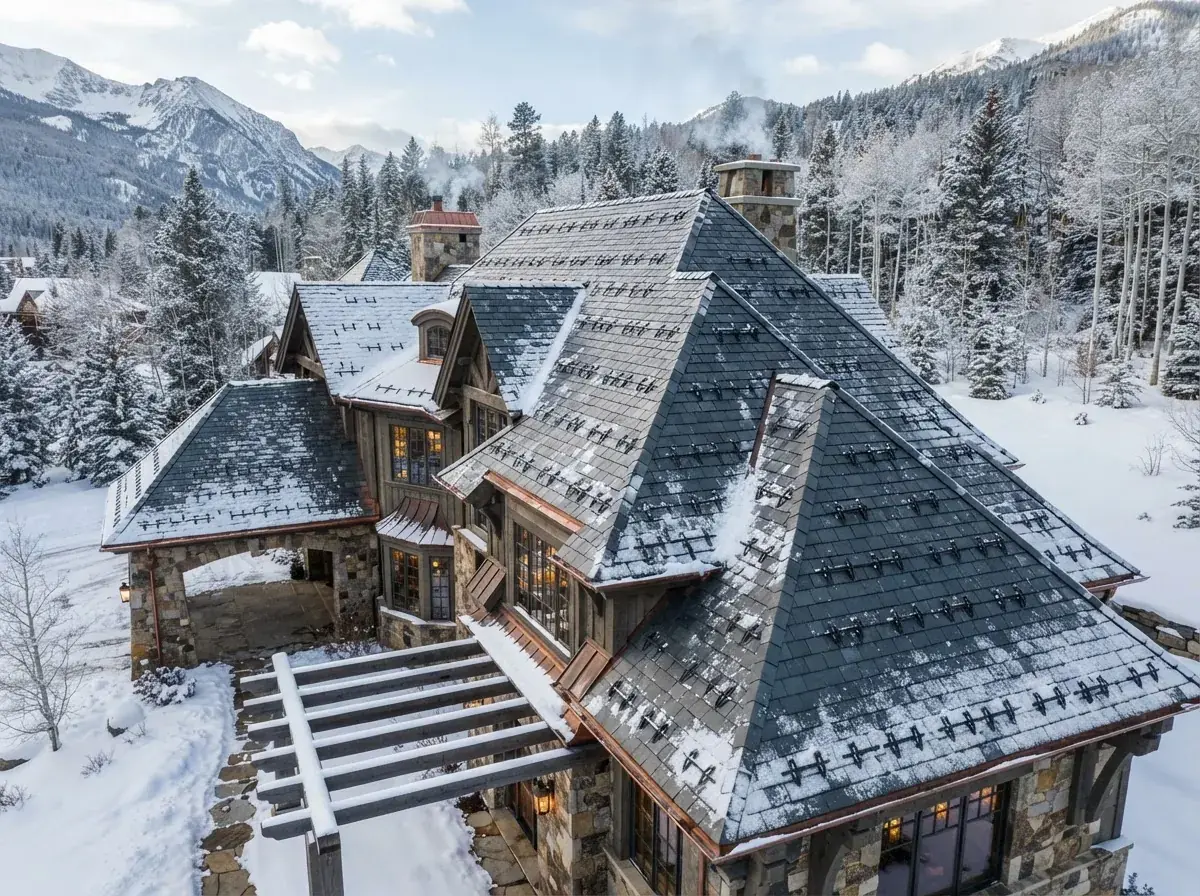
Wilton roofs deal with more shade and more winter than the shoreline towns. Cedar on wooded lots needs regular cleaning and treatment ($1–$3 per sq ft), slate and metal roofs over doors and walks often need snow guards ($1,500–$6,000 for a typical house), and houses in the regulated historic districts need commission review for alterations.
- Historic districts reviewed by commission
- 18th-century homes: careful, matched work
- Wooded lots: moss, debris, packed valleys
- Inland winters: ice dams and sliding snow
Wilton's Homes and Their Roofs
Wilton, a parish from 1726 and a separate town since 1802, had about 18,500 people at the 2020 census. It is largely wooded and residential. Eighteenth- and early nineteenth-century homes line Ridgefield Road and gather in Georgetown and Cannondale, while most of the town is larger homes on wooded lots from the twentieth century onward.
The older houses often have had several roofs over their lifetime, with cedar or slate as the original and sometimes a later asphalt layer. The newer ones commonly use cedar, synthetic slate or architectural shingles. Across both, the wooded setting and inland winters matter more than they do on the shore.
Historic Districts in Wilton
Wilton's Historic District and Historic Property Commission reviews any alteration, demolition or construction within the town's regulated local historic districts and properties. That includes Historic District No. 2 around the Old Town Hall on Ridgefield Road and Historic District No. 6 in Georgetown. Georgetown and Cannondale also have National Register historic districts.
The Ridgefield Road district includes houses from the late 1700s and early 1800s, such as the Deacon Daniel Gregory House (c. 1775). Roofs on homes of that age need matched materials and careful work around old framing, which may be irregular, undersized by modern standards, or hand-hewn. Before choosing a heavier material, have the framing checked.
Wilton Roofing Conditions
Heavy tree cover
Wilton's wooded lots mean more shade, more moss and more debris in valleys and gutters. Cedar roofs in particular benefit from regular cleaning, treatment and early replacement of split shakes. Trimming branches back from the roof lets the shakes dry and keeps leaves out of the keyways.
Ice dams
Wilton sits inland and higher than the shoreline towns, so ice dams are a bigger factor. Heat escaping into the attic melts snow that refreezes at the cold eaves; water backs up under the roofing. Ice-and-water underlayment at the eaves, good attic insulation and ventilation are the lasting fixes. Heat cable is a stopgap.
Sliding snow on slate and metal
Slate and metal shed snow in sheets. Over doors, walkways, decks and gutters, that's a safety problem and a gutter-wrecker. Snow guards set in rows across the lower roof hold it in place to melt slowly.
Old houses, layered roofs
Some older Wilton homes have asphalt over the original cedar, or several layers of patches. Under Connecticut's building code, the number of roof layers is limited, so a re-roof on these houses usually means a full tear-off and a look at the sheathing.
A Seasonal Roof Calendar for Wilton
| Season | What to check | Typical work | Typical range |
|---|---|---|---|
| Late fall | Valleys, gutters, leaders after leaf drop | Clear debris, replace any broken slates before winter | $400–$1,200 |
| Winter | Icicles and ice at eaves, sliding snow | Snow guards; note leak spots for spring | $1,500–$6,000 |
| Early spring | Storm and ice damage, slipped slates | Spot repairs, flashing checks | $500–$2,500 |
| Late spring–summer | Moss and dryness on cedar | Clean and treat cedar in dry weather | $1–$3 per sq ft |
| Any time | Chimney stains or leaks | Copper step and counter flashing | $1,200–$4,000 |
Ranges are typical for Fairfield County and Westchester in 2026 and are for planning only. They are not quotes; the real price depends on the roof, access and materials.
Cedar on a Wooded Wilton Lot: Make It Last
Cedar is a natural fit for Wilton's houses and setting, but shade is hard on it. A few habits make the difference between a cedar roof that lasts 15 years and one that lasts 30:
- Keep branches several feet off the roof so the shakes get sun and air.
- Clear valleys and keyways every fall; packed debris holds water against the wood.
- Clean and treat every few years, in a dry stretch of weather.
- Replace split and missing shakes as soon as they show, before water reaches the underlayment.
- When the time comes to replace ($15–$28 per sq ft), ask for a breathable underlayment and proper ridge and soffit ventilation.
More on cedar treatment and snow guards.
Old Framing and Heavier Roofs in Wilton
Natural slate weighs several times as much as cedar or asphalt. On a house that was built for slate, that's no problem. On an 18th-century Ridgefield Road house that originally had wood shingles, or on a newer home framed for asphalt, switching to slate needs a structural check first, and sometimes added framing.
For owners who want the slate look without the weight, synthetic slate ($14–$25 per sq ft) is the usual answer, though inside a regulated historic district a change of material goes through commission review. Where a house already has natural slate, it's usually best to keep it: repairs ($500–$2,500) and new flashing cost far less than a new slate roof ($30–$60 per sq ft).
Older houses also tend to have irregular roof planes, hand-cut rafters and plank sheathing with gaps. A roofer used to new construction may want to sheathe over everything; on a historic house, it's often better to repair the original boards and keep the roof's lines.
Georgetown and Cannondale
Georgetown, in Wilton's northeastern corner, spreads into Redding and Weston and has both a local historic district (No. 6) and a National Register listing. Cannondale, in north-central Wilton, is also a National Register historic district that retains much of its historic character. Homes in both areas tend to be older and closely tied to their original details, so matching existing materials (cedar, slate or standing-seam metal on outbuildings) is generally the simplest and best-looking route.
Because Georgetown crosses town lines, check which town your property is in before contacting a commission or building department.
Before Hiring for a Wilton Roof
Connecticut requires anyone who offers or does home improvement work, roofing included, to hold a home improvement contractor registration from the Department of Consumer Protection, and to put that registration number on every ad. The state's eLicense lookup shows whether a number is current. If the house is in one of Wilton's regulated historic districts, check with the Historic District and Historic Property Commission before work begins, and confirm permit requirements with the Building Department.
Slate & Cedar Roofing: Common Questions
How do I stop ice dams on a Wilton house?
The lasting fix is keeping the attic cold: better insulation and ventilation, plus ice-and-water underlayment at the eaves when the roof is next replaced. Snow guards and heat cable help with symptoms but don't remove the cause.
Does Wilton's historic district commission review roof work?
Yes, for properties in the regulated local historic districts and designated historic properties, the commission reviews alterations. Check with the town before changing roofing materials.
Is it worth cleaning and treating a cedar roof in deep shade?
Yes, if the shakes are still thick and mostly flat. Cleaning removes the moss and debris that hold water against the wood, and treatment slows decay. On a shaded Wilton lot, doing it every few years, together with trimming back overhanging branches, can add many years to the roof. If the shakes are already thin and splitting across whole slopes, treatment won't bring them back and replacement is the better spend.
Do I need a permit to re-roof in Wilton?
Most Connecticut building departments require a building permit for a full re-roof, and properties in Wilton's regulated historic districts may also need commission approval. Check with the Building Department before work starts.
Before you hire
Check the Contractor First
Roofing on an existing home is home improvement in Connecticut: the contractor must be registered with the Department of Consumer Protection and show the HIC number in its ads and contract. Westchester County licenses home improvement contractors the same way.
- Look up a Connecticut HIC registration
- Search Westchester County licences
- Questions to ask a slate or cedar roofer
This site is an independent guide. It doesn't perform roofing work or recommend a particular company.