Greenwich, CT · Fairfield County · Westchester
Slate Roof Replacement in Greenwich, CT
The Greenwich Slate & Cedar Roof Guide explains slate roof replacement for homeowners in Greenwich, CT and surrounding towns including Stamford, Darien and New Canaan.
A full slate roof replacement is a tear-off down to the deck, new underlayment and copper flashing, and new natural slate fastened with copper nails. It typically costs $30–$60 per sq ft installed, which for a large Fairfield County or Westchester home is often $90,000–$250,000+, and takes several weeks. It's only worth it when the slate itself has worn out; good slate with failed nails or flashing can usually be restored instead.
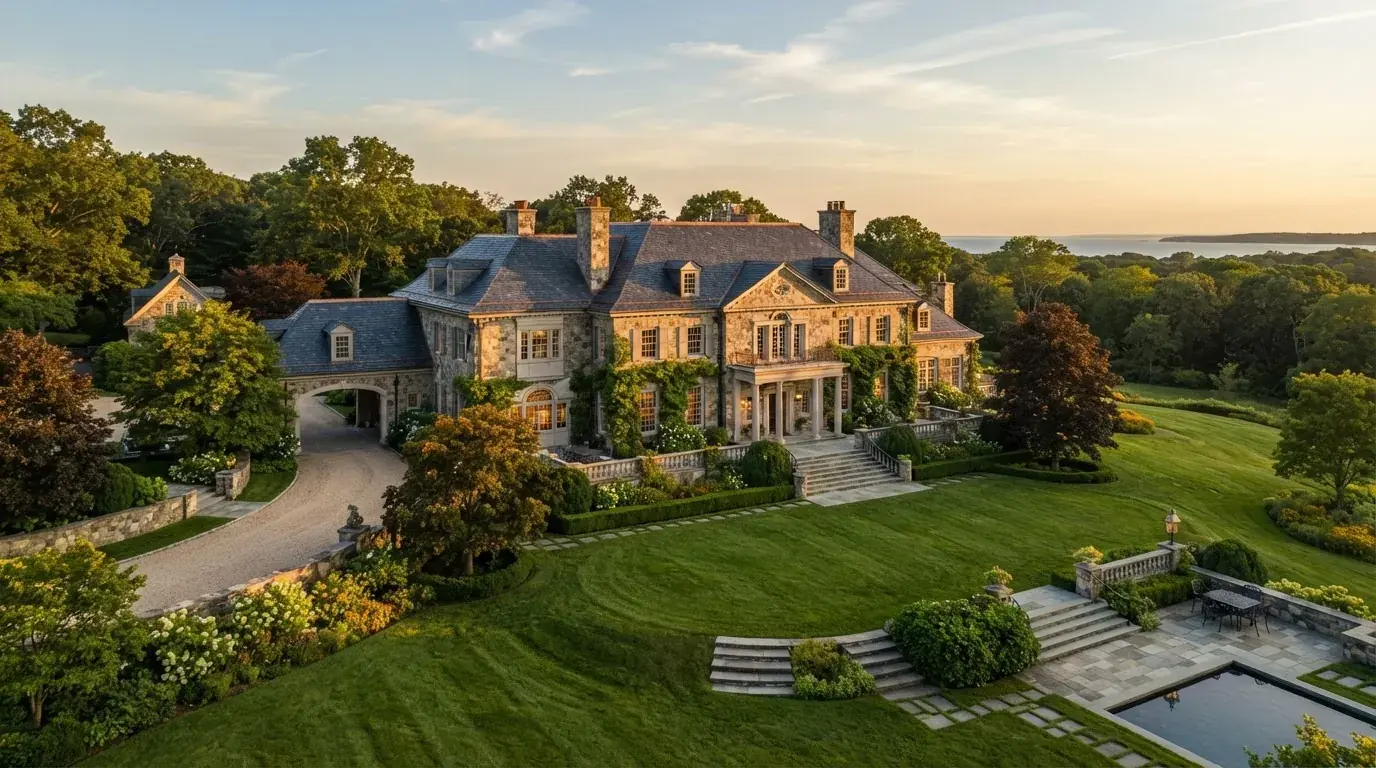
- S1-grade slate is rated for 75+ years
- Copper flashing to match the slate's life
- Framing checked for slate's weight
- Sound old slate can be salvaged and sold
When Slate Roof Replacement Makes Sense
Replacement makes sense when the stone is past saving, not just when the roof leaks. Signs the slate is at the end of its life:
- Widespread flaking, peeling or powdery edges (delamination) across many slates.
- Slates that break when handled, or sound dull rather than ringing when tapped.
- A previous owner's patchwork of asphalt, cement and mismatched slate over large areas.
- A deck that has rotted from decades of leaks and needs replacing anyway.
If only the nails or flashing have failed, a restoration that strips, sorts and relays the original slate costs less and keeps the original look. See historic slate roof restoration.
Types of Slate for a New Roof
Vermont and New York slate
The slate district on the Vermont–New York border produces the grays, greens, purples and reds seen on many Northeast roofs, in both fading (weathering) and unfading colors. Unfading green and gray-black are common choices on Greenwich and Westchester homes.
Buckingham (Virginia) slate
A dense blue-black slate with a reputation for very long life. It's often specified where a uniform dark roof is wanted.
Pennsylvania slate
Common on older roofs in the region. Some Pennsylvania slates are softer, with a shorter service life than Vermont or Virginia stone, which is one reason some early-1900s roofs are wearing out now.
Imported slate
Slate from Spain, Brazil, China and elsewhere is widely sold. Quality varies a lot between quarries, so ask for the ASTM C406 grade and test data rather than relying on price.
Graduated and textural roofs
Many large local homes have graduated roofs, with thicker, longer slates at the eaves getting smaller toward the ridge, or rough textural slate. Recreating that takes more planning and more stone.
Slate Grades and Fastening
ASTM C406, the standard specification for roofing slate, grades slate by breaking strength, absorption and depth of softening. Grade S1 is rated for more than 75 years of service, S2 for 40 to 75 years and S3 for 20 to 40 years. For a roof that costs this much, S1 slate is the norm, and the National Roofing Contractors Association recommends it.
The fastening has to last as long as the stone. That means copper nails (or stainless steel), copper flashing in valleys and at walls and chimneys, and a headlap that suits the roof pitch. Steel nails and thin galvanized flashing are what made many old slate roofs fail early.
The Slate Roof Replacement Process
- Assessment. The slate, deck, framing and flashing are checked, and samples are taken to match color if the new roof should look like the old one.
- Structural check. Natural slate weighs roughly 600 to 1,500 pounds per square (100 sq ft), several times asphalt. A house that had slate before usually carries it again; one switching to slate may need an engineer's review.
- Permit. Towns in Fairfield County and Westchester generally require a building permit for a full re-roof, and homes in a local historic district may need a certificate of appropriateness first. The contractor normally pulls the permit.
- Tear-off and deck repair. The old roof comes off in sections so the house is never left open overnight. Rotten boards are replaced.
- Underlayment and ice barrier. An ice barrier at the eaves and valleys, then underlayment over the deck. Ice dams are common here, so the eave protection matters.
- Flashing and slate. Copper valleys, step and counter-flashing, then the slate courses, hips and ridges.
- Clean-up and records. Nails swept with magnets, photos taken through each stage, and the slate source and grade written down for future repairs.
Slate Roof Replacement Cost
| Item | Typical range |
|---|---|
| Natural slate, full replacement, installed | $30–$60 per sq ft |
| Typical large Fairfield County / Westchester home | $90,000–$250,000+ |
| Synthetic slate alternative | $14–$25 per sq ft |
Ranges are typical for Fairfield County and Westchester in 2026 and are for planning only. They are not quotes; the real price depends on the roof, access and materials.
The biggest cost drivers are roof size and pitch, the number of dormers, valleys and chimneys, scaffolding, the slate chosen (thickness and quarry), and how much copper work the roof needs. A roof with many intersecting planes can cost far more per square foot than a simple gable.
Replacing a Slate Roof Near the Sound
Shoreline homes in Greenwich, Darien, Westport and Rye see more wind-driven rain and salt. On these roofs, the details that matter most are copper or stainless fasteners, well-secured ridge and hip slates, and generous headlap on exposed elevations. Inland, heavy shade means slower drying, so valley design and gutter capacity deserve more attention.
Slate Roof Replacement: Common Questions
How long does a new slate roof last?
It depends on the slate grade and the fastening. S1 slate under ASTM C406 is rated for more than 75 years, and with copper flashing and nails many slate roofs go well past a century. The flashing usually needs attention before the stone does.
Can old slate be reused on the new roof?
Yes, if it's sound. Good slates can be sorted and reused, often on the most visible elevations, with new slate from a matching quarry filling in. Sound salvaged slate also has resale value.
Does a slate roof need a building permit?
Yes, a full re-roof generally needs a building permit from the town, and homes in a local historic district may also need historic district approval before work starts. Check with the town building department.
Is synthetic slate a good alternative?
It can be. Synthetic slate costs less and weighs a fraction of natural slate, but it won't last as long, and some historic district commissions don't accept it. See the synthetic slate page for the trade-offs.
Before you hire
Check the Contractor First
Roofing on an existing home is home improvement in Connecticut: the contractor must be registered with the Department of Consumer Protection and show the HIC number in its ads and contract. Westchester County licenses home improvement contractors the same way.
- Look up a Connecticut HIC registration
- Search Westchester County licences
- Questions to ask a slate or cedar roofer
This site is an independent guide. It doesn't perform roofing work or recommend a particular company.