Greenwich, CT · Fairfield County · Westchester
Snow Guard Installation in Greenwich, CT
The Greenwich Slate & Cedar Roof Guide explains snow guard installation for homeowners in Greenwich, CT and surrounding towns including Stamford, Darien and New Canaan.
Snow guards for a typical house usually cost $1,500–$6,000 installed in Fairfield County and Westchester, and most jobs take a day or two. They hold snow on steep, slick roofs (slate, tile and metal above all) so it melts in place instead of sliding off in one sheet onto gutters, plantings, cars or people. They're worth it over entrances, walkways, driveways, decks and lower roofs.
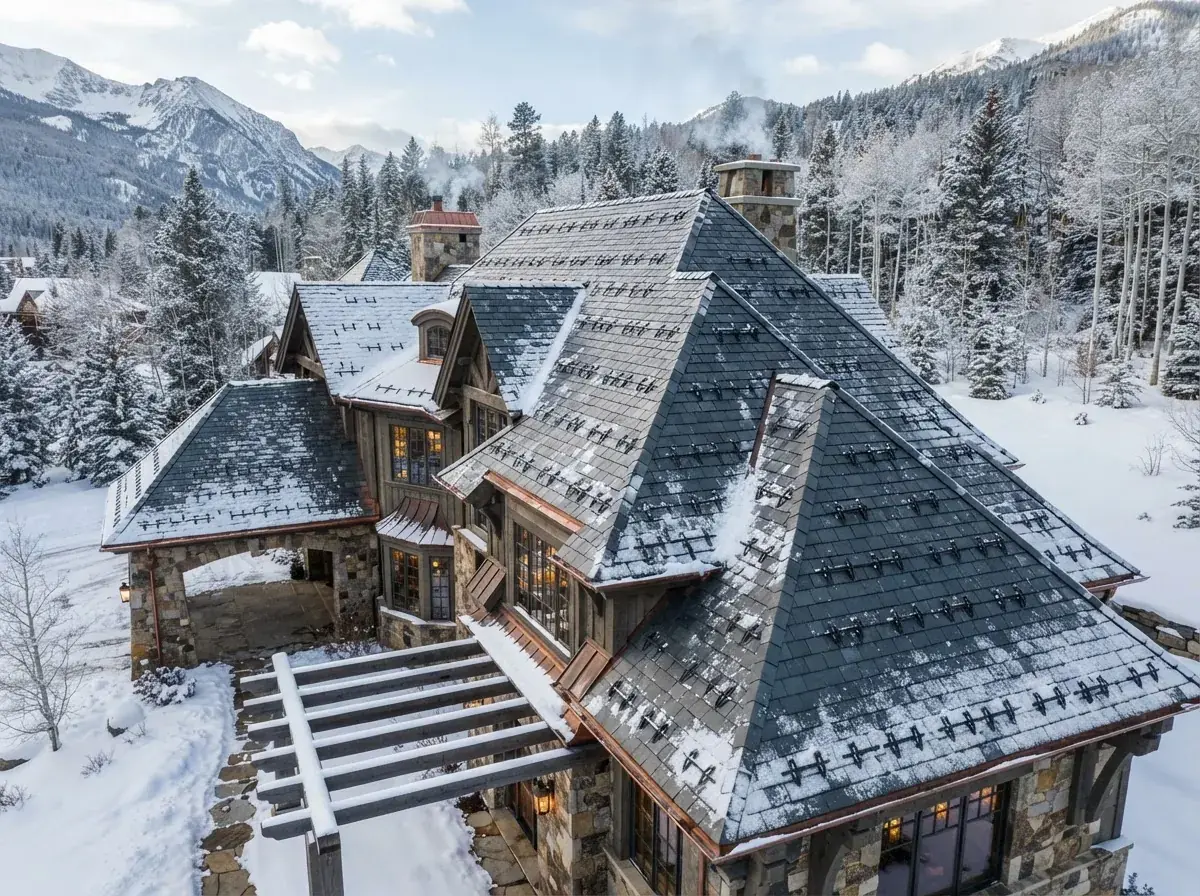
- Pad guards for slate, tile and cedar
- Rail (pipe) systems for metal and steep roofs
- Layout based on pitch and roof length
- Fastened to the deck, not glued on
Types of Snow Guards
Pad-style guards for slate
Individual copper, bronze or stainless guards with a strap that's hooked or nailed under the slate above, so they're fastened to the deck. Set in a staggered pattern across the roof.
Guards for clay and concrete tile
Brackets made for the tile profile, fastened through the deck beneath the tile, so the tile itself isn't relied on to hold snow.
Guards for cedar
Cedar roofs are rough enough that snow slides less, but low-pitched shake roofs over doors and walkways sometimes still need pad guards.
Rail (pipe or bar) systems
One or two continuous rails on brackets, used on standing-seam metal and very steep roofs. Seam clamps attach to the metal without piercing it.
Copper and bronze finishes
Copper or cast bronze guards weather to match copper gutters and flashing, and won't corrode in salt air near the Sound.
When a Roof Needs Snow Guards
Not every roof needs them. The case is strongest when:
- the roof is slate, tile or metal, which shed snow far more abruptly than rough surfaces;
- the pitch is steep (manufacturers commonly start recommending guards from about a 6-in-12 pitch up);
- the eave is above a door, walk, driveway, deck or lower roof;
- there are copper gutters worth protecting from being torn off;
- the roof faces south or is warm underneath, so snow loosens and slides in a single mass.
Fairfield County and Westchester get regular nor'easters and freeze-thaw swings. A heavy wet snow followed by sun is when slate roofs dump snow, often all at once.
How Snow Guards Are Laid Out and Installed
Snow guards only work if there are enough of them, spaced correctly. A handful along the eave can be overloaded and torn out by the weight of snow above them. Good practice:
- Measure pitch and rafter length. Longer and steeper roofs carry more sliding load and need more rows.
- Use the manufacturer's layout. Most guard makers publish spacing charts by pitch, roof length and design snow load. Ask for the layout in writing.
- Stagger the guards so snow can't find a clear path between them.
- Fasten to the deck. On existing slate, guards are slid under the slates and fixed with copper nails or slate hooks, or installed as slates are replaced. Adhesive-only guards are a poor choice on steep roofs.
- Protect the material. Slates lifted to set guards must go back without cracking. This is work for a slate roofer, not a general crew.
What Affects the Cost of Snow Guards
A typical house falls in the $1,500–$6,000 range. The main drivers:
- How many guards. Long, steep roofs need several rows.
- Material. Cast bronze and copper cost more than stainless or aluminum.
- Roof type. Retrofitting existing slate or tile takes longer than installing during a new roof.
- Height and access. Three-story eaves need staging or a lift.
- Rail systems on metal are priced by length.
Ranges are typical for Fairfield County and Westchester in 2026 and are for planning only. They are not quotes; the real price depends on the roof, access and materials.
Snow Guards and Ice Dams
Snow guards hold snow on the roof; they don't cause or cure ice dams. Ice dams form when heat from the house melts snow higher up and it refreezes at the cold eave. That's a ventilation and insulation problem, plus an underlayment question: an ice barrier membrane along the eaves is standard practice on new roofs in this climate. If a slate roof has both sliding snow and ice dams, fix the attic first, then size the snow guards.
Where Snow Guards Matter Most Around Greenwich
The houses that benefit most share a few traits: steep slate or tile roofs, entrances and walkways under the eaves, and long, uninterrupted slopes. That describes many of the Tudor and Colonial Revival houses in Greenwich, Scarsdale and Rye, and the larger country houses of Bedford and New Canaan.
Standing-seam metal roofs on porches, additions and modern houses shed snow even faster than slate, and their smooth, painted or copper surface gives snow almost nothing to grip. A rail system along the eave, sized for the roof's length, is the usual answer there. On a cedar roof, snow guards are rarely needed except on low porch roofs where sliding snow would land on steps.
Location on the house matters as much as roof type. A slope that dumps snow onto a lawn may not need guards at all, while the same slope over the front door or a lower copper roof does. A sensible plan puts the guards where people walk and where sliding snow would hit something expensive.
Questions to Ask Before Hiring
- Which guard is proposed for this roof material, and how is it fastened to the deck?
- Can I see the manufacturer's layout chart for this pitch and roof length?
- How many rows, and how far apart?
- What happens if slates or tiles crack while guards are installed?
- Does the guard material match the gutters and flashing (copper with copper)?
- Will the work be done during a re-roof or repair, when lifting slates or tiles is already planned?
Adding guards while other roof work is under way usually costs less than a separate visit.
Before you hire
Check the Contractor First
Roofing on an existing home is home improvement in Connecticut: the contractor must be registered with the Department of Consumer Protection and show the HIC number in its ads and contract. Westchester County licenses home improvement contractors the same way.
- Look up a Connecticut HIC registration
- Search Westchester County licences
- Questions to ask a slate or cedar roofer
This site is an independent guide. It doesn't perform roofing work or recommend a particular company.