Westchester County
Slate & Cedar Roofing in Rye, NY
The Greenwich Slate & Cedar Roof Guide explains slate, cedar and tile roofing for homeowners in Rye, NY.
Slate roof repair, cedar shake replacement and copper flashing work in Rye are shaped by one thing more than any other: Long Island Sound. Small slate repairs typically run $500–$2,500, while flashing and valley work on an older slate roof is more often $2,000–$8,000. Most repairs take one to three days; a full slate or cedar roof is weeks of work and is usually planned a season ahead.
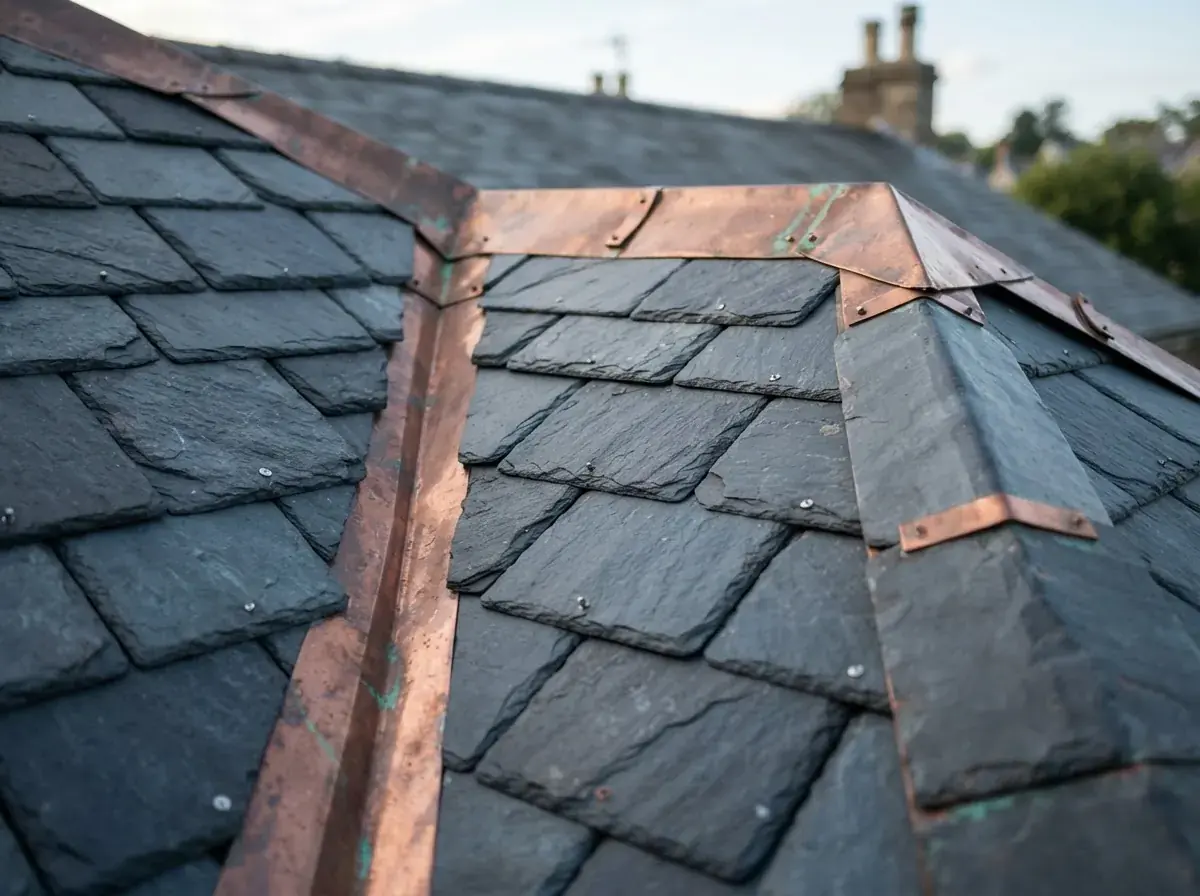
- Salt air shortens the life of steel nails and flashing
- Copper or stainless fasteners suit waterfront roofs
- Boston Post Road district is a National Historic Landmark
- Most older slate here needs flashing, not a tear-off
Rye's Housing Stock and What It Means for the Roof
Rye's housing ranges from 19th-century homes and the historic downtown to waterfront properties along Milton Point, Rye Beach and the Long Island Sound shoreline. The city was incorporated as a village in 1904 and chartered as a city in 1942, the most recent city charter in New York State, and it is a separate municipality from the neighboring Town of Rye. That matters for a homeowner: building permits and landmark questions for a house in the city go to the City of Rye, not the town.
Rye's 1985 master plan names neighborhoods that read like a tour of roof types: Milton Harbor and Greenhaven on the water, Indian Village and Loudon Woods inland, the Post Road Old Cottage District and Dublin in West Rye. Slate is common on the larger pre-war houses; cedar shingles show up on shingle-style and Colonial Revival homes; and copper is everywhere, from half-round gutters to bay window roofs.
Pre-war slate houses
Many older Rye homes have slate that is still sound. Matching color, size and thickness for spot repairs keeps the roof looking original and avoids the cost of a full replacement.
Shingle-style and Colonial homes
Cedar on these houses weathers faster on the side facing the water. It is normal to see one slope gray and split while the opposite slope still looks healthy.
Waterfront rebuilds
Newer homes near the shore often use synthetic slate or standing-seam copper details. The products differ, but the weak points are the same: edges, ridges and penetrations.
Long Island Sound Exposure
Rye sits on Long Island Sound, with Milton Harbor and the Sound forming its eastern border, and large areas near the water lie in the 100-year flood zone. Flooding is a basement problem, but the same storms drive rain sideways into roofs. Waterfront homes in Rye take wind-driven rain, salt and storm surge, so ridge and hip fastening, flashing at chimneys and dormers, and corrosion of older steel nails deserve particular attention.
- Nail sickness. On slate roofs from the early 1900s the slate often outlives the steel nails holding it. Slates slip one at a time, usually after a nor'easter.
- Edge uplift. Rakes, eaves and ridges take the most wind. Copper or stainless fasteners and properly bedded ridge slates are worth the extra cost within sight of the water.
- Salt on metal. Galvanized steel flashing and gutters corrode quickly here; copper lasts and develops its patina instead.
A sensible routine for a waterfront roof is a look after every major storm season, not just when a ceiling stain appears. Slipped slates are cheap to replace early and expensive once water reaches plaster.
The Boston Post Road District and Landmark Review
Rye's Boston Post Road Historic District is a 286-acre National Historic Landmark district on the south side of the Post Road, with Greek Revival and Gothic Revival buildings from the mid-1800s. It was designated in 1993 and includes the Jay Estate, John Jay's childhood home. Rye also holds a second National Historic Landmark, Playland, the amusement park that opened in 1928.
Rye's Landmarks Advisory Committee recommends historic districts and protected sites and structures to the City Council. If a home is designated, exterior work such as a change of roofing material should be planned with the city's preservation requirements in mind. For houses that aren't designated, a re-roof in the same material is ordinary maintenance, though a building permit may still be needed.
Westchester County requires home improvement contractors, roofers included, to hold a county home improvement license, and homeowners can check a contractor's license number with the Westchester County Department of Consumer Protection before signing anything.
Common Roof Work in Rye and Typical Costs
| Issue | Typical fix | Typical range |
|---|---|---|
| A few slipped or cracked slates after a storm | Replace with matched slate on copper hooks or nails | $500–$2,500 |
| Leaks at chimneys, dormers or valleys | New copper step, counter or valley flashing | $2,000–$8,000 |
| Corroded steel gutters | Half-round copper gutters and leaders | $40–$80 per linear ft |
| Weathered cedar on the water side | Clean, treat, replace split shingles | $1–$3 per sq ft |
| Cedar past its life | Tear-off and new cedar roof | $15–$28 per sq ft |
| Storm opening before a permanent repair | Emergency tarping | $300–$1,500 |
Ranges are typical for Fairfield County and Westchester in 2026 and are for planning only. They are not quotes; the real price depends on the roof, access and materials.
Choosing Between Repair and Replacement on a Rye Roof
The honest answer for most slate roofs in Rye is repair. Good Vermont or Pennsylvania slate laid a century ago can last another fifty years if the flashing, valleys and fasteners are renewed. Replacement makes sense when slates are delaminating across whole slopes, when soft slate is crumbling at the nail holes, or when earlier repairs used mismatched material and roofing cement.
Cedar is different. A cedar roof that is cupped, split and growing moss on most slopes is usually at the end of its life, and treatment only buys time. For a coastal house, ask about fastener type, ventilation under the shingles and how the ridge will be secured, because those details decide how the next roof survives the Sound.
Copper Details on Rye's Older Homes
Copper is the material that ties a Rye roof together. Half-round gutters, conductor heads, valley liners, chimney flashing and the small flat-seam roofs over bays and porches are all commonly copper on the city's pre-war houses. Copper handles salt air far better than galvanized steel or aluminum, and a well-made copper gutter or valley can outlast two or three asphalt roofs.
A few things decide whether copper work lasts near the water:
- Weight. 16-ounce copper is the usual standard for flashing and valleys; heavier 20-ounce sheet is common for gutters and exposed edges on larger homes.
- Compatible metals. Copper should be fastened with copper or stainless steel. Steel nails or aluminum touching copper corrode quickly in salt air.
- Soldered seams. Properly cleaned and soldered seams last decades; sealant-only joints do not.
- Expansion. Long gutter runs need expansion joints, or the copper cracks at the seams after a few hot summers and cold winters.
The green patina on old copper is normal and protective. Pinholes, split seams and green streaks running down the siding are the signs that a section has reached the end of its life.
What a Thorough Rye Roof Inspection Covers
Before anyone recommends a repair or a new roof, a specialty roof inspection should look at the whole system, not just the stain on the ceiling. On a Rye house that usually means:
- Walking or staging the roof safely, without cracking slate, to check slates, fasteners and ridges slope by slope.
- Checking every flashing point: chimneys, dormers, skylights, walls and plumbing vents.
- Looking at gutters, leaders and any built-in gutters from above and below.
- Going into the attic where possible, to trace leaks and check ventilation and decking.
- Photographing everything and writing down what needs attention now and what can wait.
A written report with photos is worth keeping. It shows the roof's condition before a storm season, helps with insurance after one, and makes it easy to compare bids on the same scope of work.
Slate & Cedar Roofing: Common Questions
Is salt air really a problem for slate roofs in Rye?
Yes. The slate itself handles salt well, but steel nails, galvanized flashing and older gutters corrode much faster near the water. That is why slipped slates and flashing leaks are the usual problems on Rye waterfront roofs.
Do I need approval to re-roof a historic house in Westchester?
It depends on the municipality and whether the home is a designated landmark or inside a local historic district. Several Westchester towns and villages require a certificate of appropriateness for exterior alterations to designated properties. Check with the building or planning department before changing roofing materials.
Before you hire
Check the Contractor First
Roofing on an existing home is home improvement in Connecticut: the contractor must be registered with the Department of Consumer Protection and show the HIC number in its ads and contract. Westchester County licenses home improvement contractors the same way.
- Look up a Connecticut HIC registration
- Search Westchester County licences
- Questions to ask a slate or cedar roofer
This site is an independent guide. It doesn't perform roofing work or recommend a particular company.