Westchester County
Slate & Cedar Roofing in Armonk, NY
The Greenwich Slate & Cedar Roof Guide explains slate, cedar and tile roofing for homeowners in Armonk, NY.
Synthetic slate replacement, underlayment and flashing renewal on 25-year-old roofs, and cedar repair on wooded lots are the specialty roof work Armonk homes most often need. Synthetic slate typically costs $14–$25 per sq ft; natural slate is $30–$60 per sq ft. Armonk is a hamlet, so permits and landmark review go through the Town of North Castle.
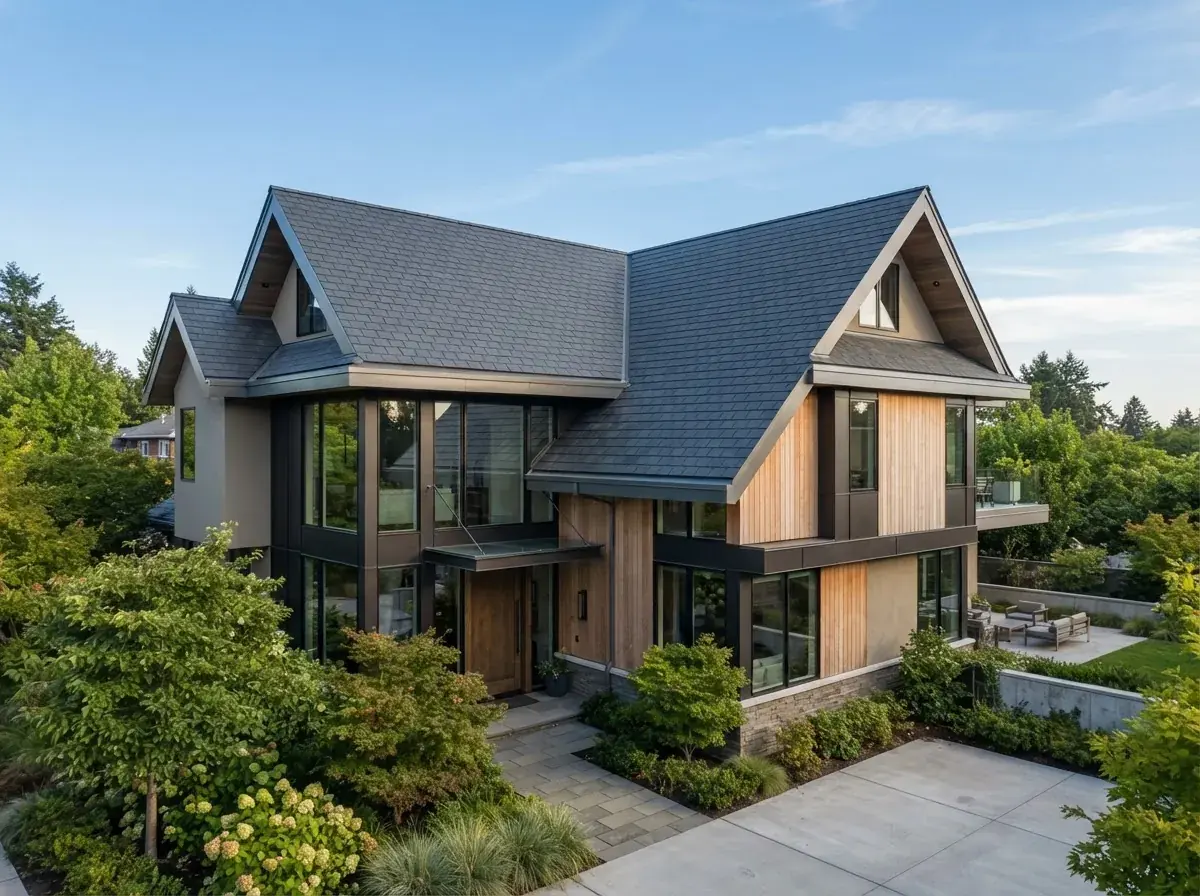
- Armonk is a hamlet in the Town of North Castle
- Many roofs date from the late-1990s building boom
- Early synthetic slate is reaching the end of its life
- Landmark approval comes before the building permit
Armonk's Homes: Historic Core, Newer Estates
Armonk, the main hamlet of the Town of North Castle, mixes historic buildings along Bedford Road with large single-family homes built from the 1990s onward on generous wooded lots. The hamlet has about 4,500 residents and is best known as the home of IBM's headquarters. New house construction surged from the late 1990s, mostly north of the business district.
Because Armonk is not a separate village, the Town of North Castle issues building permits and runs landmark review. That is worth knowing before a roofing project starts, since permit applications go to the town hall, not to a hamlet office.
Bedford Road Historic District
Armonk's Bedford Road Historic District is listed on the National Register and includes Smith's Tavern, built around 1779, which served as a militia headquarters during the Revolutionary War and now houses the North Castle Historical Society.
1990s–2000s luxury homes
Many Armonk homes built in the late 1990s and 2000s used synthetic slate, cedar or tile. These roofs are now reaching the age where flashing, underlayment and early-generation synthetic products need attention.
Older farmhouses and capes
Scattered older homes, often with cedar or slate on the main block and later additions in other materials.
When a 25-Year-Old Luxury Roof Starts to Fail
A roof from 1998–2005 is now 20 to 28 years old. Natural slate and good clay tile from that period should have decades left, but the parts around them may not:
- Early synthetic slate. Some first-generation composite products have faded, curled or cracked well before their advertised life. Whether to repair or replace depends on the product and whether matching pieces still exist.
- Flashing. Aluminum or painted-steel flashing used on some newer homes doesn't last like copper. Leaks at walls, chimneys and skylights often trace back to it.
- Underlayment. On tile roofs, the felt beneath the tile ages faster than the tile. Lifting the tile and renewing the underlayment is a well-established repair.
- Cedar on shaded lots. A 25-year cedar roof under heavy trees is often at or past its life.
For a large synthetic roof that is failing across every slope, it's worth comparing a new synthetic roof with natural slate. Natural slate costs more up front and weighs more, so the framing needs checking, but it can last a century.
Landmark Review in North Castle
North Castle's Landmarks Preservation Committee designates landmarks and preservation districts and issues Certificates of Appropriateness for changes to their appearance. Work that needs a certificate can't start until an application is filed, and the building permit is issued only after the certificate is granted. Interior work isn't reviewed. If a property is designated, plan roofing changes with that approval in mind; most newer homes are not designated.
Westchester County requires home improvement contractors, roofers included, to hold a county home improvement license, and homeowners can check a contractor's license number with the Westchester County Department of Consumer Protection before signing anything.
Wooded Lots and Reservoir Country
Armonk's wooded properties bring shade, moss and debris. Keeping valleys and gutters clear and treating cedar regularly prevents slow, hidden leaks. Large homes here often have long gutter runs, several roof levels and valleys that dump onto lower roofs, so one blocked valley can send water a long way before it shows inside. Snow guards above entries, decks and lower roofs are worth considering on any steep slate or metal roof.
Questions to Ask Before Re-Roofing a Large Armonk Home
- Will the bid cover full tear-off, new underlayment and new flashing, or only the visible material?
- What metal will flashing, valleys and gutters be, and what weight?
- How will skylights, solar panels or snow guards be handled?
- Is the roof framing checked if the new material is heavier?
- Who pulls the Town of North Castle permit, and is landmark review needed?
Common Roof Work in Armonk and Typical Costs
| Issue | Typical fix | Typical range |
|---|---|---|
| Curling or cracked early synthetic slate | New synthetic slate roof | $14–$25 per sq ft |
| Replace synthetic with the real thing | Natural slate roof | $30–$60 per sq ft |
| Tile roof leaking at 25 years | Lift, renew underlayment, relay tile | $12–$25 per sq ft |
| Leaks at walls and chimneys | Copper flashing replacement | $1,200–$4,000 |
| Shaded cedar roof past its life | New cedar roof | $15–$28 per sq ft |
| Copper bay or dormer roof | Flat or standing-seam copper | $3,000–$12,000 |
Ranges are typical for Fairfield County and Westchester in 2026 and are for planning only. They are not quotes; the real price depends on the roof, access and materials.
Repairing a Synthetic Slate Roof
Synthetic slate is made from rubber, plastic or composite blends molded to look like natural slate. It is lighter and cheaper to install, and current products carry long manufacturer warranties. On older Armonk homes, though, the question is often what to do with a product that is no longer made.
Options, from least to most work:
- Spot repair. Possible when matching pieces still exist, from the manufacturer, a successor product or spare bundles left after construction. Always check the garage and attic for leftovers.
- Flashing-only renewal. If the synthetic slate is sound but leaks come from walls, chimneys or skylights, new copper flashing may be all that's needed.
- Re-roof by slope. On a large house, the worst slopes, often the south- and west-facing ones, can sometimes be replaced first, though color matching between old and new is hard.
- Full replacement. In synthetic or natural slate, with new underlayment and flashing throughout.
Before deciding, look up the original product's warranty. Some manufacturers honor claims for early failure, and the original installation paperwork can help.
Ventilation, Ice and Large Roof Areas
Big houses with cathedral ceilings, finished attics and complex roof plans are prone to ice dams. Warm air leaking into the roof melts snow, which refreezes at the cold eaves and backs up under the roofing. The fixes are partly roofing and partly insulation: sealing air leaks into the roof, ventilating where the design allows, and installing ice-and-water underlayment along eaves and valleys whenever the roofing comes off.
Large roofs also have long valleys feeding lower roofs and gutters. In a heavy rain those valleys carry a lot of water, and a valley that is slightly too narrow, or a gutter that is undersized, overflows every storm. When re-roofing, ask for valley widths and gutter sizes to be checked against the roof area they drain, not just copied from what was there.
Slate & Cedar Roofing: Common Questions
How do I know whether my roof is synthetic or natural slate?
Look at the edges of a slate from a ladder or at a spare piece. Natural slate shows layered stone, rings when tapped and varies slightly piece to piece. Synthetic pieces are uniform, often have molded texture and a plastic or rubber feel. House records or the original builder's paperwork usually say which was used.
Is it worth replacing synthetic slate with natural slate?
Sometimes. Natural slate costs more and weighs more, so the roof framing must be checked, but it lasts far longer. For a home owned long-term, the lifetime cost can favor natural slate; for a shorter horizon, a current-generation synthetic is usually the practical choice.
Who issues roofing permits in Armonk?
The Town of North Castle. Armonk is a hamlet within the town, not a separate village, so building permits and landmark reviews go through North Castle.
Before you hire
Check the Contractor First
Roofing on an existing home is home improvement in Connecticut: the contractor must be registered with the Department of Consumer Protection and show the HIC number in its ads and contract. Westchester County licenses home improvement contractors the same way.
- Look up a Connecticut HIC registration
- Search Westchester County licences
- Questions to ask a slate or cedar roofer
This site is an independent guide. It doesn't perform roofing work or recommend a particular company.